Casa Batlló vs. Casa Milà: Which Gaudí House Is Worth It?
Field Notes from an Interior Designer: Inside Two Very Different Gaudí Houses
If you’re heading to Barcelona and trying to decide which Antoni Gaudí house is worth your time (and ticket), you’re not alone. Casa Batlló and Casa Milà sit just a few blocks apart on Passeig de Gràcia, yet they offer completely different experiences—visually, emotionally, and spatially.
built for a wealthy family.
As an interior designer, I walked into both less interested in the headlines and more curious about the aftereffects:
How did my body feel inside each space?
What details lingered once I stepped back onto the street?
And what design lessons actually translate beyond Barcelona?
Because a Gaudí house isn’t just something you tour. It’s something you absorb.
Why These Two Gaudí Houses Exist at All
Before comparing Casa Batlló and Casa Milà, it helps to understand why they were built—and why that matters.
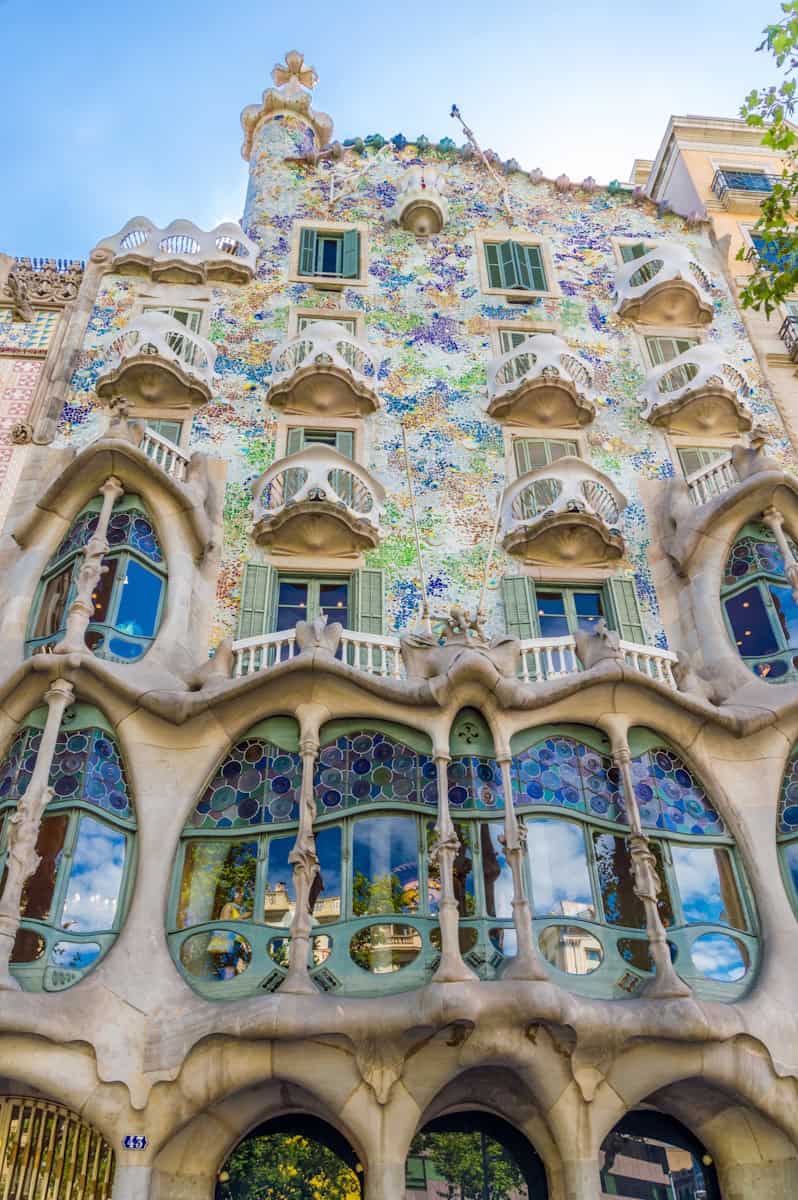
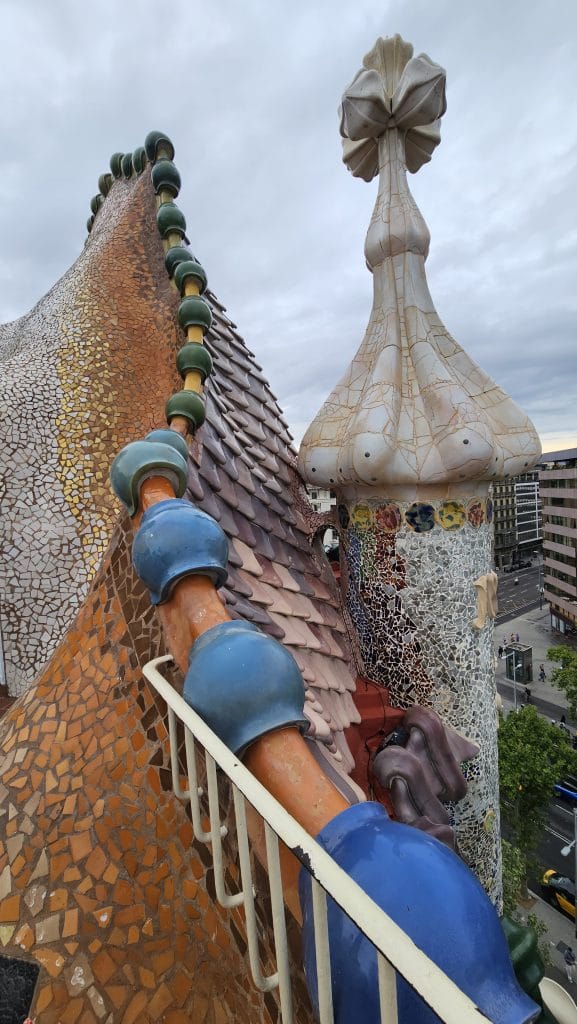
Casa Batlló began as a standard building that Gaudí was hired to completely reimagine for a wealthy family who wanted something unforgettable. This Gaudí house was meant to stand out, to signal creativity, status, and imagination in a rapidly modernizing city.
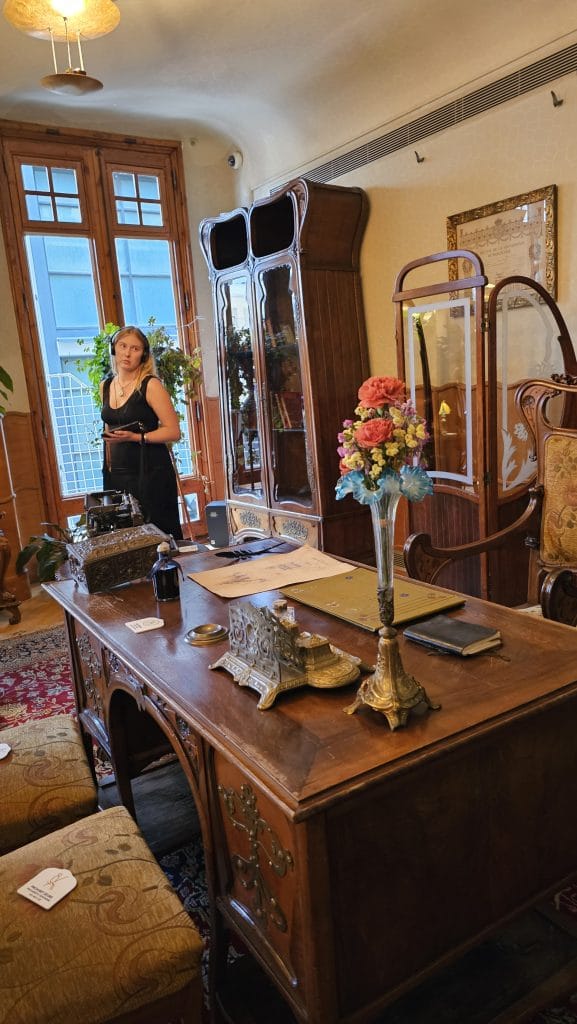
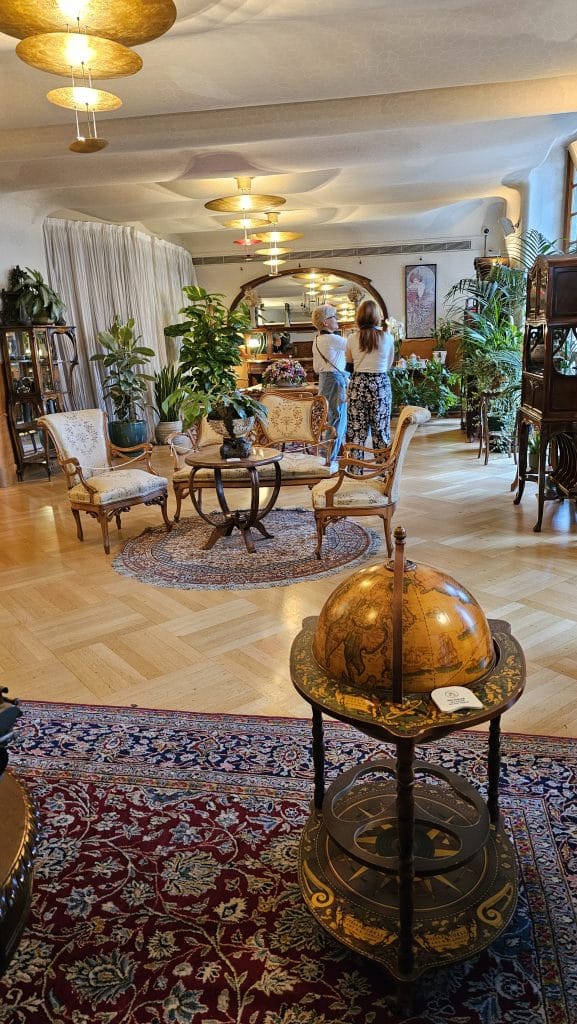
to view the furnished splendor
of the early 20th century.
(Gold & Platinum Tickets.)
Casa Milà, also known as La Pedrera, had a very different brief. It was designed as a residential apartment building—intended to be lived in by multiple families. Yes, it’s sculptural and unconventional, but it was also practical, forward-thinking, and surprisingly functional.
Two Gaudí houses. Two purposes. Two design languages.
Casa Batlló: The Gaudí House That Feels Like Stepping Into a Mood
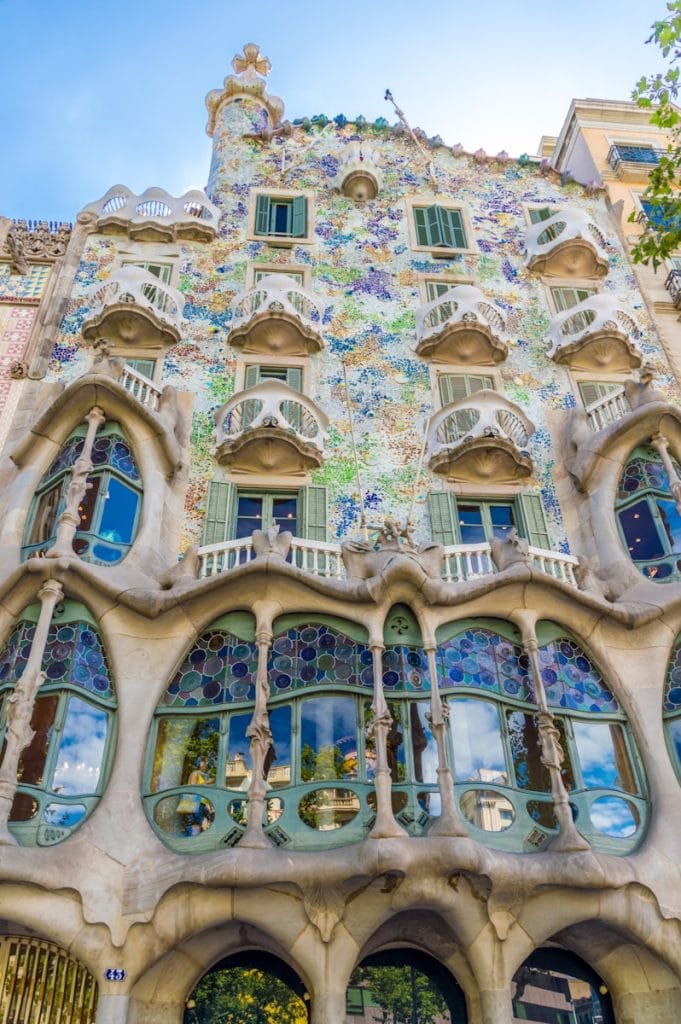
Casa Batlló is the Gaudí house people fall in love with first. It’s expressive, colorful, and immersive in a way that feels almost cinematic.
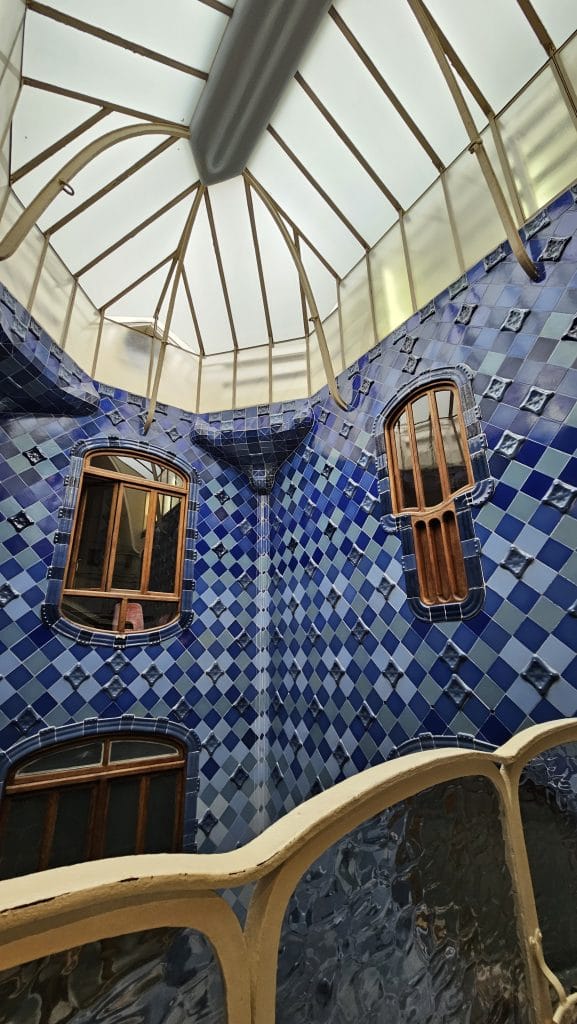
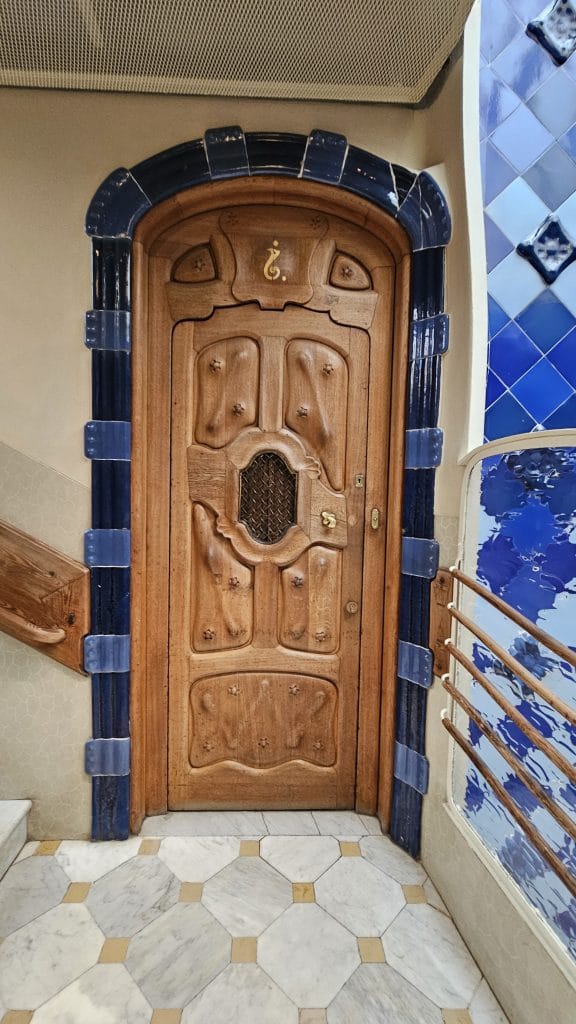
Inside, there are no hard edges demanding attention. Everything curves, flows, and softens. Light enters indirectly and bounces around the space, shifting colors from hour to hour. Blues deepen. Whites glow. Even the quiet moments feel intentional.
As a designer, what struck me most wasn’t just the color—it was how controlled it all felt. Nothing is loud for the sake of being loud. Color saturation rises and falls and the contrast is gentle. Its ornamental features feels supportive rather than busy.
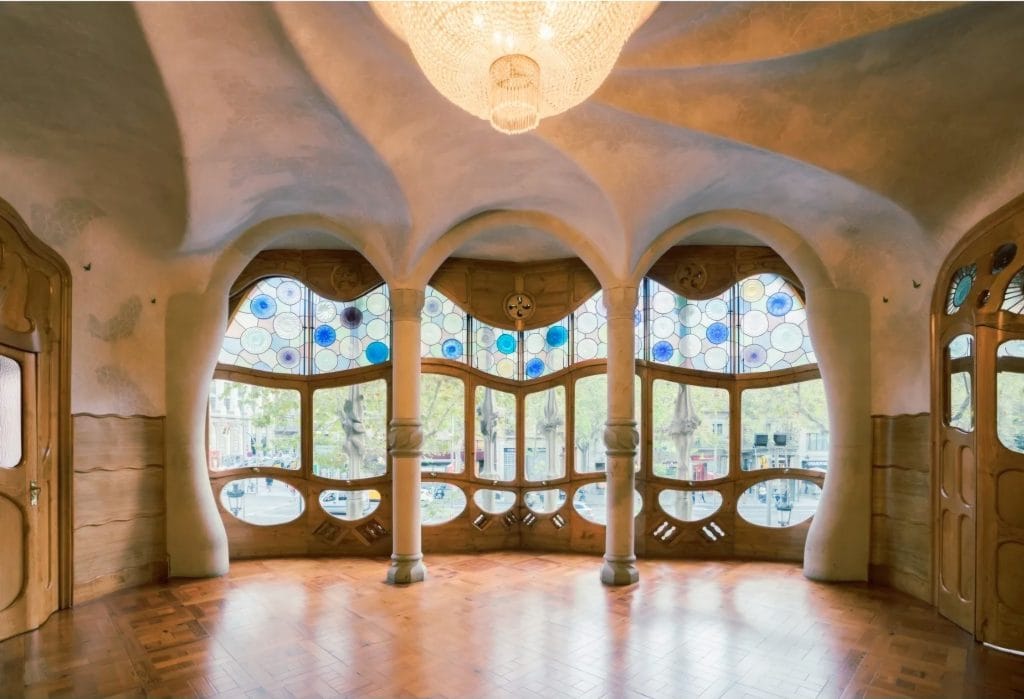
It features “whimsy” at its best!
This Gaudí house doesn’t rush you. It invites you to linger.
Of course, it’s popular. You’ll feel the crowds, especially midday. But Casa Batlló leans into this by offering a highly curated experience—lighting, sound, and storytelling that guide you through the building almost like a narrative.
The Gold and Platinum tickets at Casa Batlló offer a more immersive way to experience Antoni Gaudí’s masterpiece. Both include priority access (to the Gaudí Dome etc. ) and a richly produced augmented-reality device that brings the house’s symbolism and design details to life. In addition, private rooms and the original residence are opened up for a rare glimpse into how the Batlló family once lived.
Casa Batlló in a nutshell:
Emotional, playful, sensory, unforgettable
Best for: color lovers, creatives, and anyone craving inspiration over explanation
Casa Milà: The Gaudí House That Wins You Over Slowly
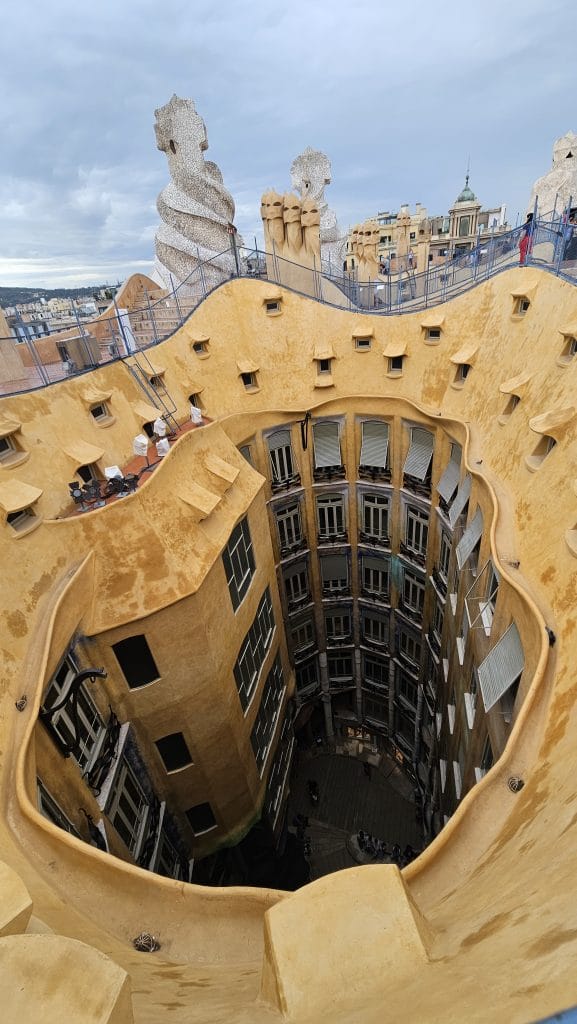
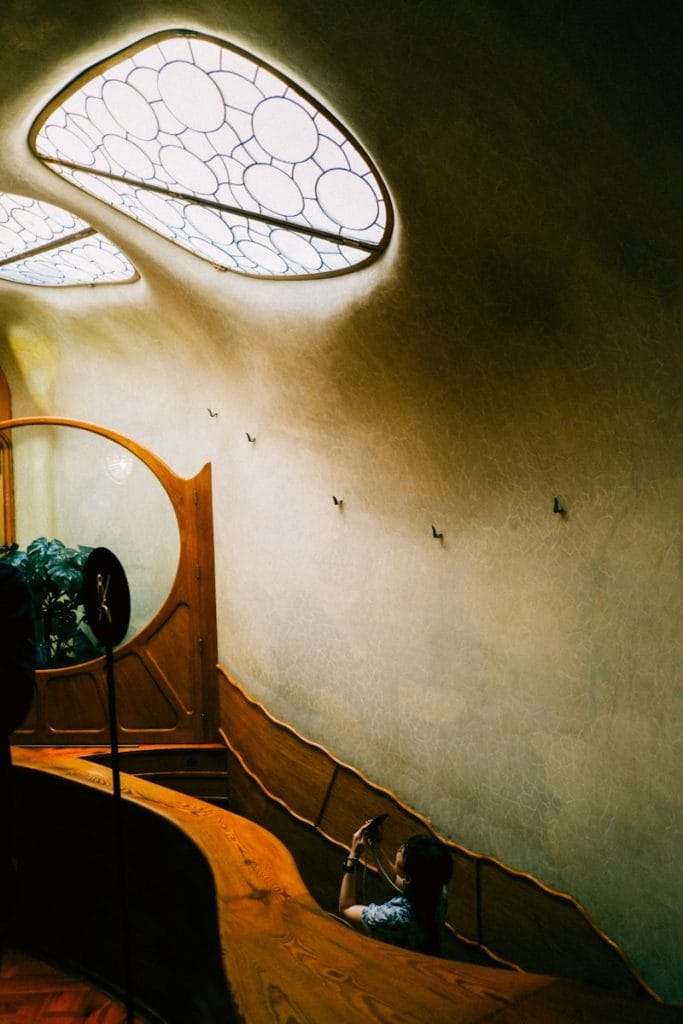
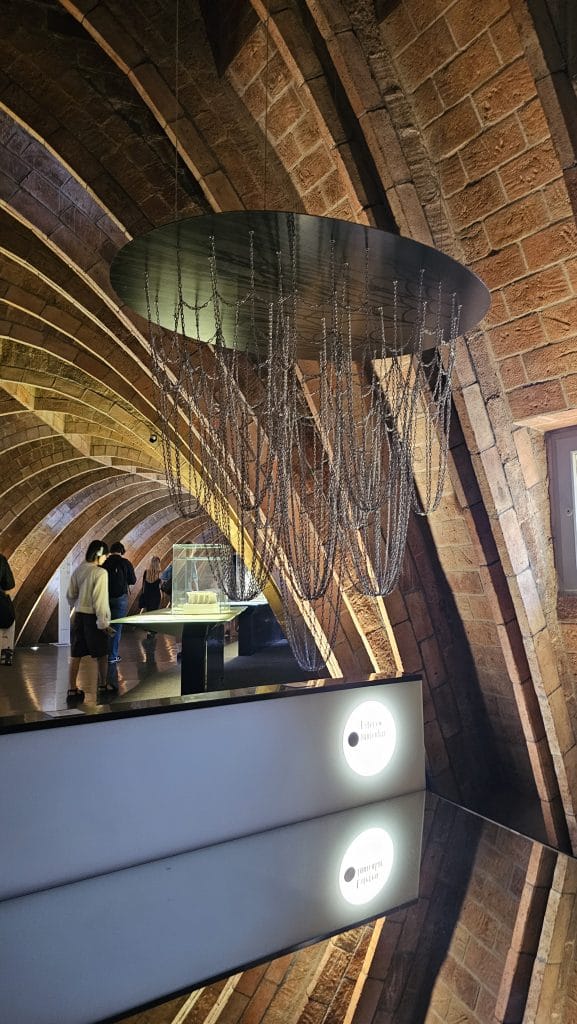
Casa Milà doesn’t shout for attention the way Casa Batlló does. It reveals itself slowly. And honestly, that’s part of the surprise. It’s far more playful than its reputation suggests. Curved walls shift as you walk, ironwork twists like seaweed, and the famous rooftop feels more like a sculpture garden than a roof.
So while many people think of Casa Milà as a secondary stop, but those who step inside usually discover something else entirely: a building that’s colorful, inventive, deeply livable—and still quietly radical more than a century later.
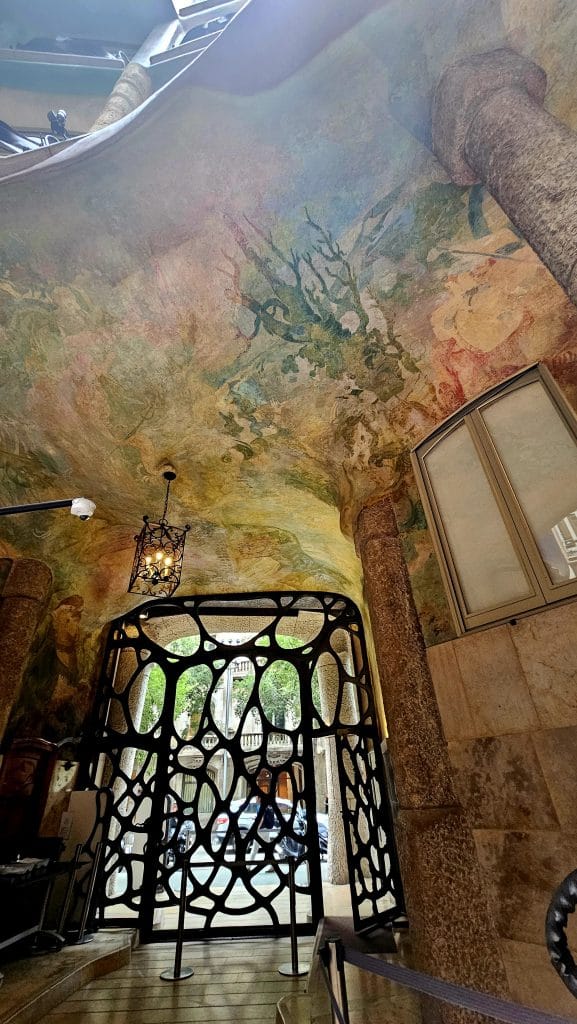
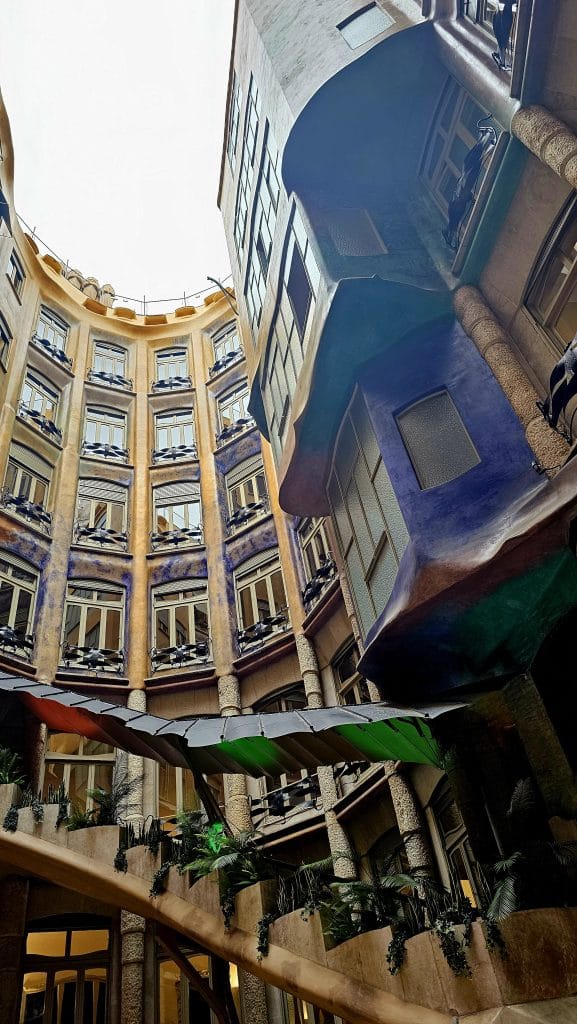
What I appreciated most as an interior designer was how livable Casa Milà feels. The apartments make sense—the circulation flows logically and the layout allows you to visualize what it would really be like to live in one of Gaudi’s apartments. If you love architecture your will adore walking though this space!
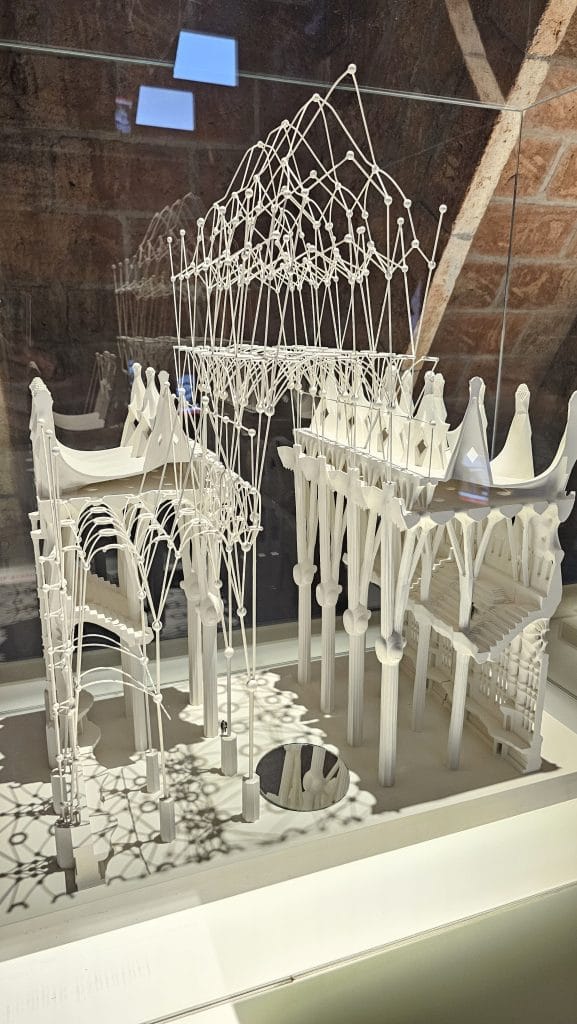
Even more surprising is how innovative the building is. Casa Milà was designed to breathe, with flexible apartments, rooms filled with natural light, and ventilation moving through the structure long before modern sustainability became part of the conversation.
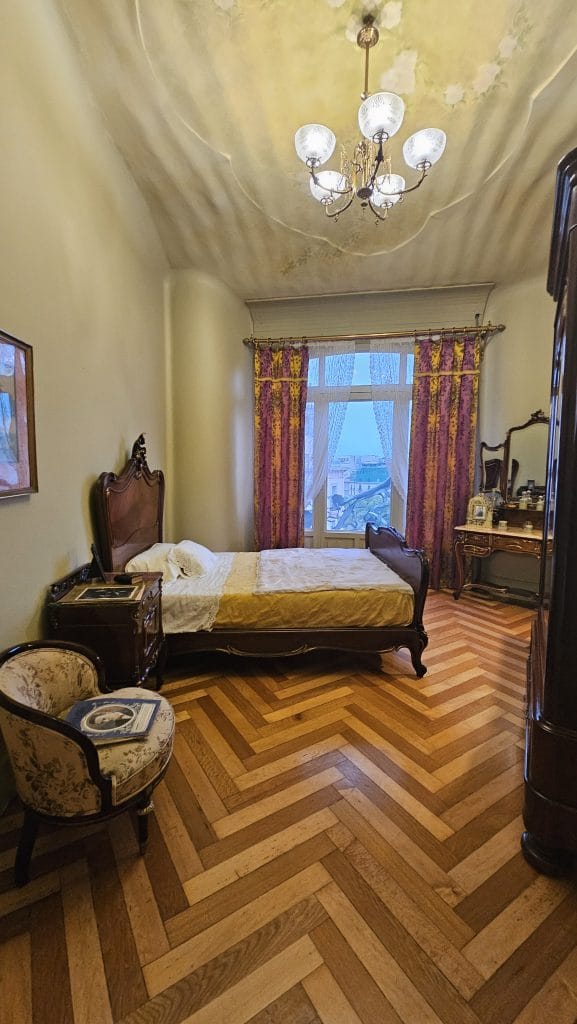
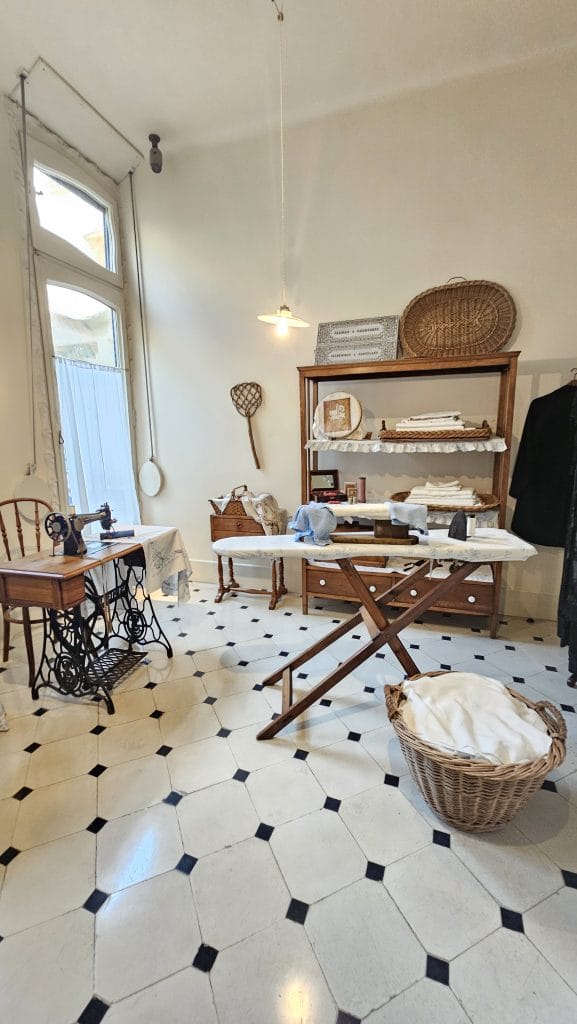
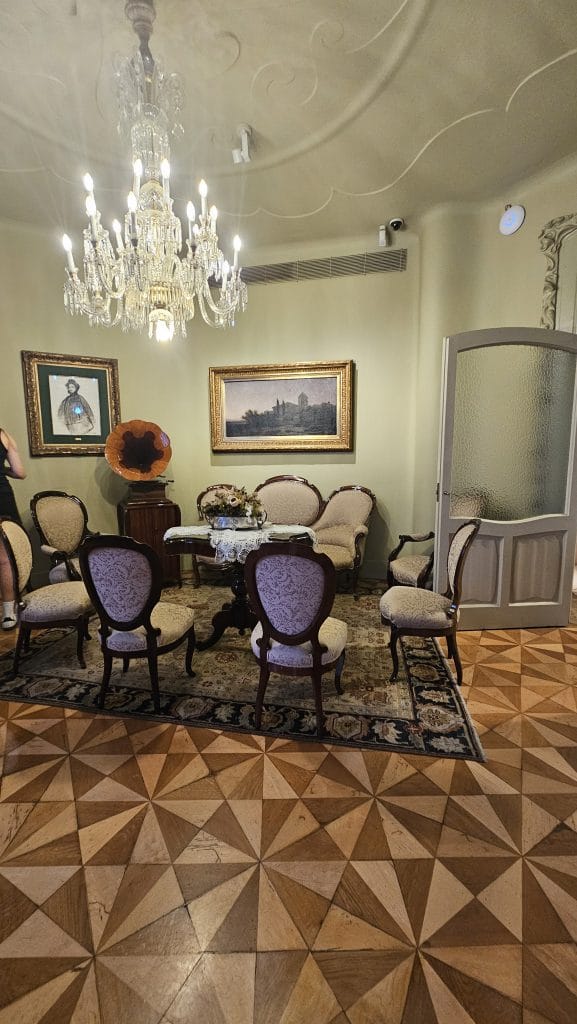
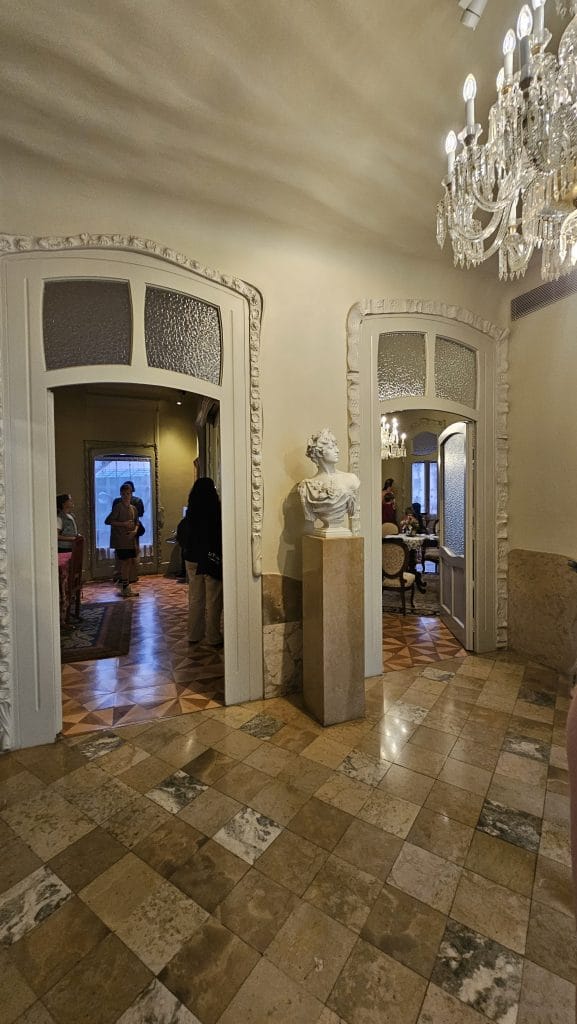
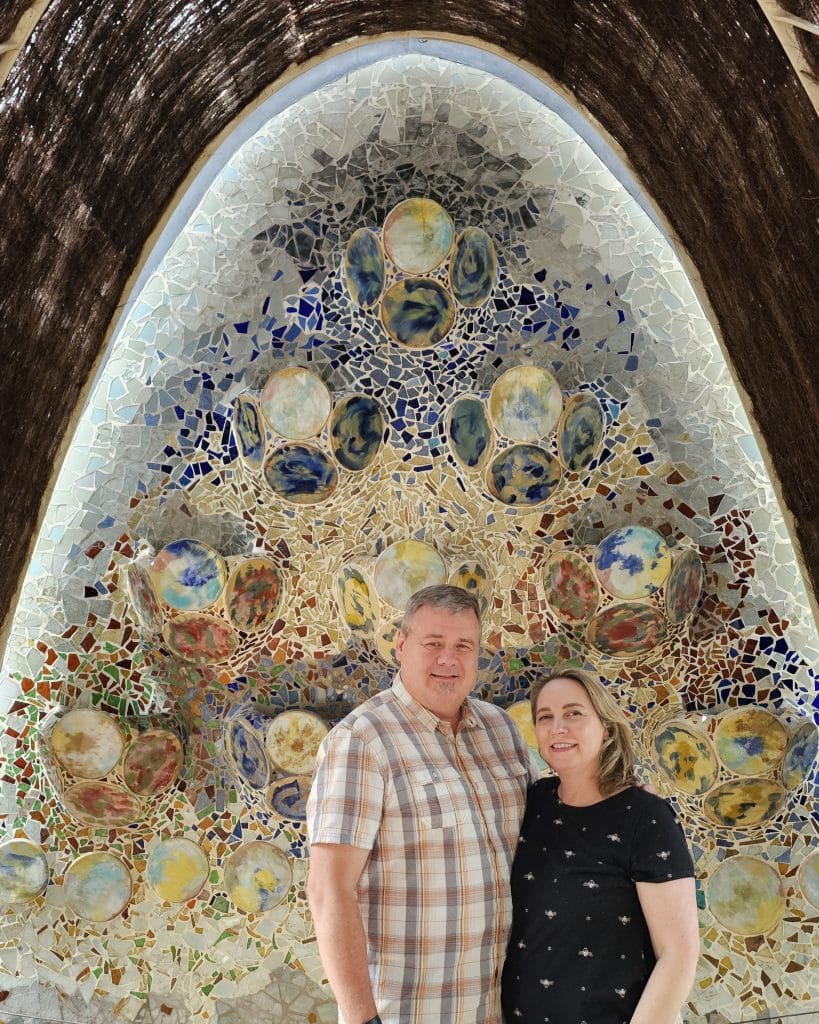
The apartments at Casa Milà reveal a softer, more decorative side of Antoni Gaudí’s design. Painted ceilings, detailed plasterwork, patterned floors, and custom wood doors add warmth and color to the otherwise sculptural architecture. Walking through the rooms gives a rare glimpse into the refined, everyday elegance of upper-class life in early-20th-century Barcelona
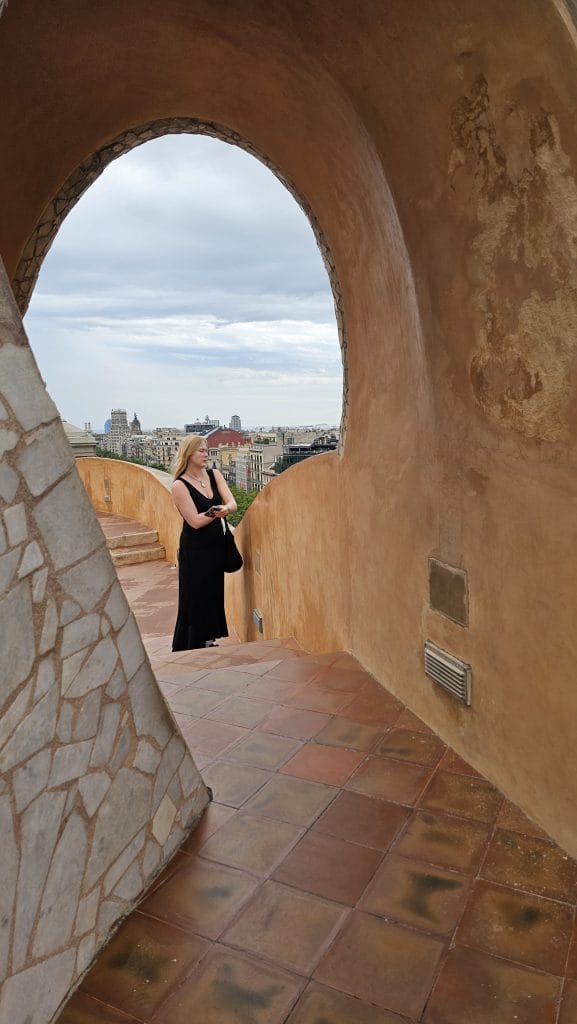
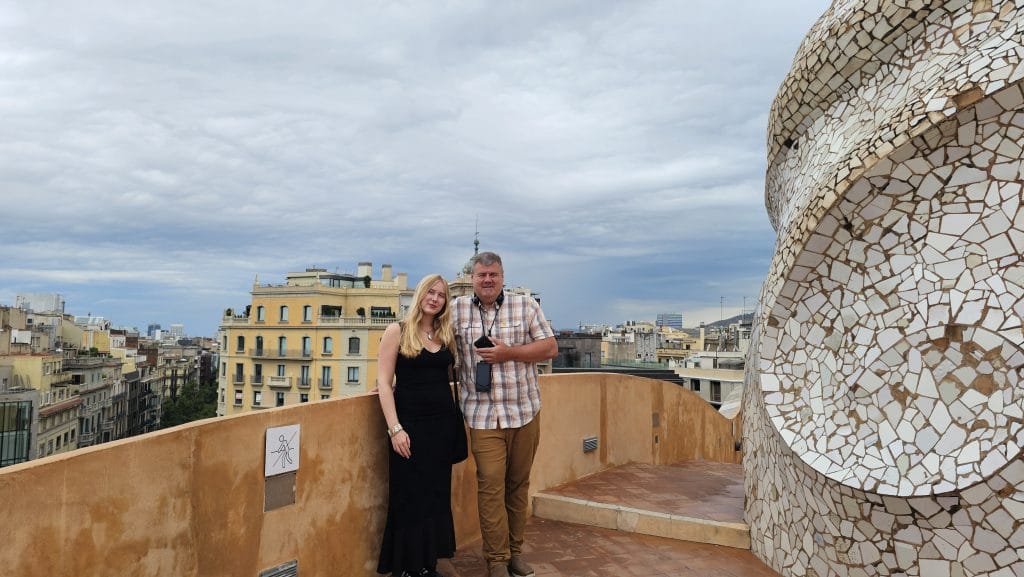
The unique rooftop however, is the true star of the show! Open, sculptural, and unexpectedly playful, it offers space to wander, pause, and take in the 360 views of Barcelona. Compared to Casa Batlló, the experience feels less choreographed and more exploratory, which in turn offers a wonderous surprise!
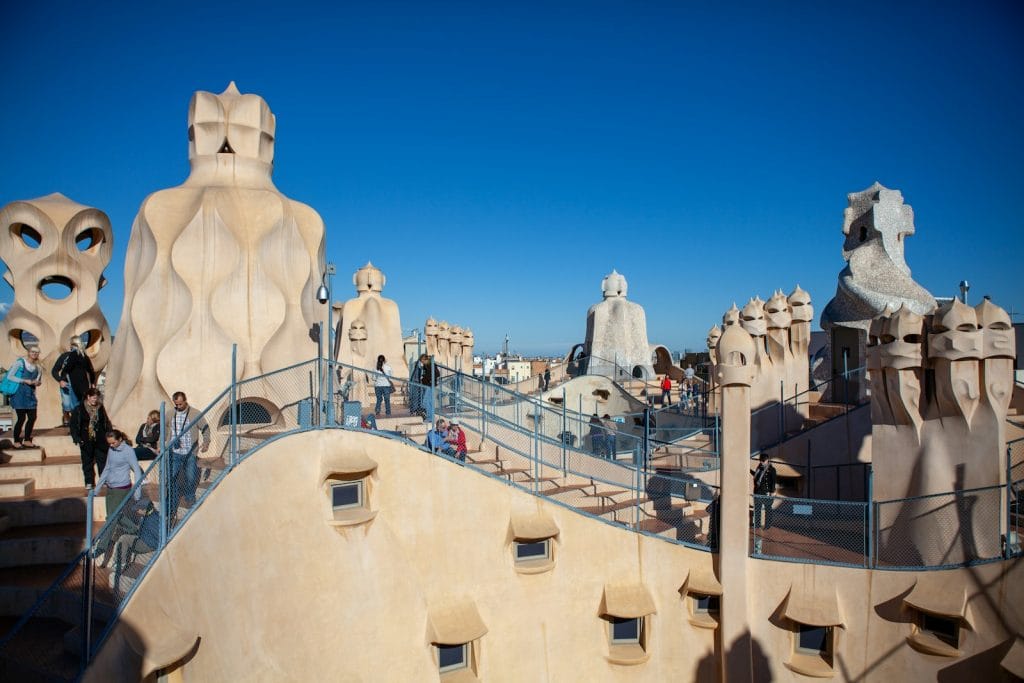
immersive art with every step.
Casa Milà in a nutshell:
Architectural, grounded, quietly impressive
Best for: architecture lovers, minimalists, and people who enjoy exterior exploration.
Color vs. Structure: What Each Gaudí House Prioritizes
Walking these two Gaudí houses back-to-back makes something very clear: Gaudí wasn’t repeating himself—he was responding to context.
- Casa Batlló leads with color, surface, and emotional resonance.
- Casa Milà leads with structure, material honesty, and long-term use.
Neither approach is better. They simply solve different problems.
This distinction shows up constantly in interiors today. Some spaces need warmth, softness, and visual energy. Others need calm, order, and grounding. The mistake happens when we try to force one approach onto every space.
Gaudí didn’t do that—and that’s why his work still feels relevant.
How Each Gaudí House Shapes the Way You Move
One of the most fascinating parts of visiting a Gaudí house is noticing how it changes your behavior.
In Casa Batlló, people slow down. They touch the walls. They look up. The curves and color invite curiosity.
In Casa Milà, posture shifts. Movement becomes more direct. The architecture encourages forward motion and spatial awareness.
That’s not accidental. Gaudí understood that design influences the body just as much as the eye.
This idea shows up all over Barcelona, and I talk more about it in my post Unlock Barcelona’s Architecture Secrets to Elevate Your Interior Design, where I explore how the city’s buildings teach us to think differently about scale, rhythm, and flow.
These Gaudí houses are just the most concentrated examples.
Crowds, Offerings, and the Real-World Experience
Let’s talk logistics for a moment—because experience matters.
- Casa Batlló feels like a fully designed attraction. Multimedia elements, a clear path, and a strong narrative shape the visit.
- Casa Milà feels more open and architectural, especially in the apartments and on the rooftop.
If you’re sensitive to crowds or prefer wandering at your own pace, Casa Milà may feel more comfortable. If you enjoy immersive storytelling and emotional impact, Casa Batlló delivers.
Both are worth seeing—but for very different reasons.
So… Which Gaudí House Is Worth It?
Here’s my honest, designer answer:
- Choose Casa Batlló if you want inspiration, emotion, and visual magic.
- Choose Casa Milà if you want architectural clarity, space, and a deeper understanding of how buildings actually function.
If you can see both, you’ll walk away with a fuller picture of Gaudí—not just as an artist, but as a problem-solver who understood humans deeply.
What a Gaudí House Teaches Us About Our Own Homes
What stays with me most after visiting a Gaudí house isn’t a specific detail—it’s the reminder that design always sends a message.
Every choice asks a question:
Do you want this space to energize you—or calm you?
Invite you in—or hold you upright?
Encourage play—or provide structure?
These questions sit at the heart of interior design, whether you’re renovating a home, choosing paint colors, or rearranging furniture.
And that’s where color coaching & professional design guidance quietly enters the conversation—not as decoration, but as intention. Just like Gaudí’s work, the most powerful spaces aren’t accidental. They’re designed with feeling in mind. Reach out here if you need help bringing your space to life!